
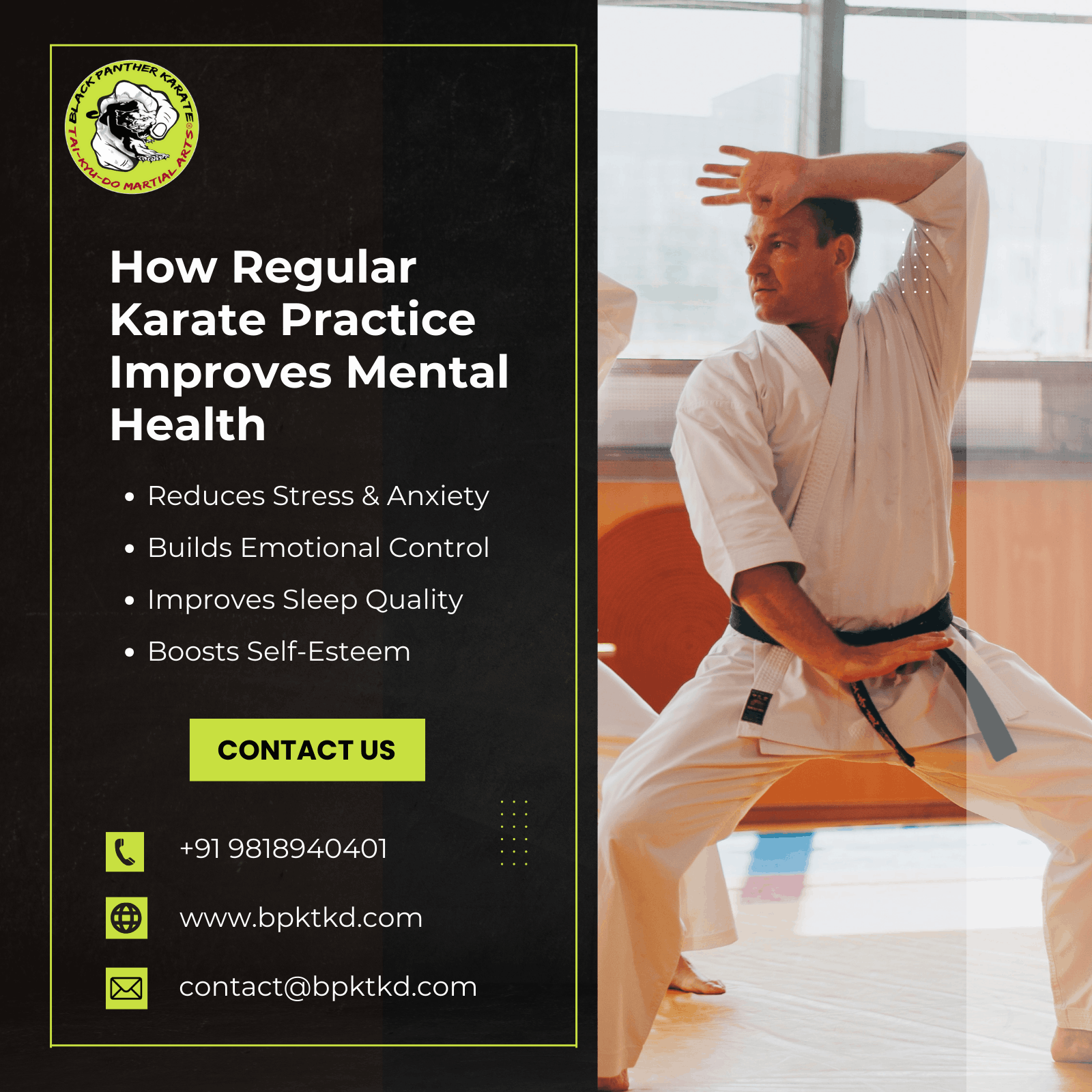
In today’s fast-paced world, many people face mental health challenges such as stress, anxiety, and depression. More than ever, people are looking for effective ways to improve their mental well-being. Physical activity has proven to be one of the most helpful tools, and among different types of exercise, martial arts—especially karate—stand out. Karate offers not only physical benefits but also powerful mental health advantages. Regular karate practice helps people develop discipline, focus, emotional balance, and resilience, leading to a healthier and more balanced mind.
Building Focus and Concentration
Karate is not just about self-defense; it requires strong focus and attention. Every movement, stance, and kata (a series of planned movements) must be performed with care and accuracy. With regular practice, the mind becomes trained to stay focused and present. This helps reduce overthinking and mental distractions. Many people who practice karate notice better concentration, improved problem-solving skills, and clearer decision-making. For those dealing with stress or racing thoughts, karate works like an active form of meditation that helps calm the mind.
Boosting Self-Discipline and Confidence
Self-discipline and confidence play an important role in mental health, and karate helps build both. Training teaches the value of consistency, effort, and responsibility. As students work toward goals—such as learning new techniques, earning higher belts, or mastering a kata—they gain a strong sense of achievement. These accomplishments build self-confidence and encourage a positive self-image. Overcoming challenges in training also helps individuals become more resilient and confident when facing challenges in everyday life.
Reducing Stress and Anxiety
Karate is an effective way to manage stress and anxiety. Like other physical activities, it releases endorphins that naturally improve mood. In addition, karate includes controlled breathing and structured movements, which help relax the body and mind. The repeated actions of punches, kicks, and blocks allow built-up tension to be released. Many practitioners find the dojo to be a safe place where they can express emotions, reduce stress, and regain mental clarity.
Enhancing Emotional Regulation
One of the key lessons in karate is emotional control. Practitioners are taught to show respect, patience, and self-control during training and sparring. They learn how to manage feelings such as anger or frustration in challenging situations. This ability to control emotions during practice helps individuals remain calm and balanced in daily life. For those who struggle with emotional reactions, karate encourages emotional stability and thoughtful responses.
Encouraging Social Connection
Strong social connections are essential for good mental health. Karate classes create a supportive community where students train together, motivate each other, and grow as a team. This sense of belonging helps reduce loneliness and isolation, which often contribute to anxiety and depression. Training with others also builds mutual respect, cooperation, and positive relationships, all of which support emotional well-being.
Mind-Body Awareness
Karate helps improve awareness of both the mind and body. Practitioners learn to recognize their physical limits, maintain balance, and improve posture. This awareness encourages mindfulness, allowing individuals to stay focused on the present moment rather than worrying about the past or future. Through regular practice, mindfulness becomes a habit that supports mental clarity and emotional health.
Developing Resilience
Resilience is an important skill for handling life’s challenges, and karate helps develop it through consistent practice. Mistakes, failures, and setbacks are part of the learning process. Karate teaches students to keep trying, learn from errors, and improve over time. This mindset builds mental strength and confidence, helping individuals face difficulties with determination and calmness.
Conclusion
Karate is more than just a physical activity—it is a practice that supports mental and emotional well-being. Regular training improves focus, builds confidence, reduces stress, and strengthens emotional control. By encouraging mindfulness, social connection, and self-discipline, karate plays an important role in improving mental health. Whether you want to manage stress, reduce anxiety, or find inner balance, karate can be a meaningful and positive addition to your life.
For anyone looking for a natural, engaging, and effective way to support mental well-being, stepping onto the karate mat can be a powerful step toward better mental and physical health.